On Sale This Week: Lean Ground Beef + Pork Side Ribs

How We Wrap Up the Grazing Season Each Fall

written by

Mike Dougherty

posted on

October 23, 2025

As the days get shorter and colder, we are winding down our grazing season. The grass we have left is in areas where we've either had chickens on pasture over the past few years, or bale-grazed last winter.

This is a good news story for our farm. The regenerative practices we've been using have helped turn one of the weaker parts of our farm into one of the best parts. Because of that, we now have more and better grass. It also means a longer grazing season for our cows, and we will have to buy less hay this winter.

Preparing for This Year's Bale Grazing
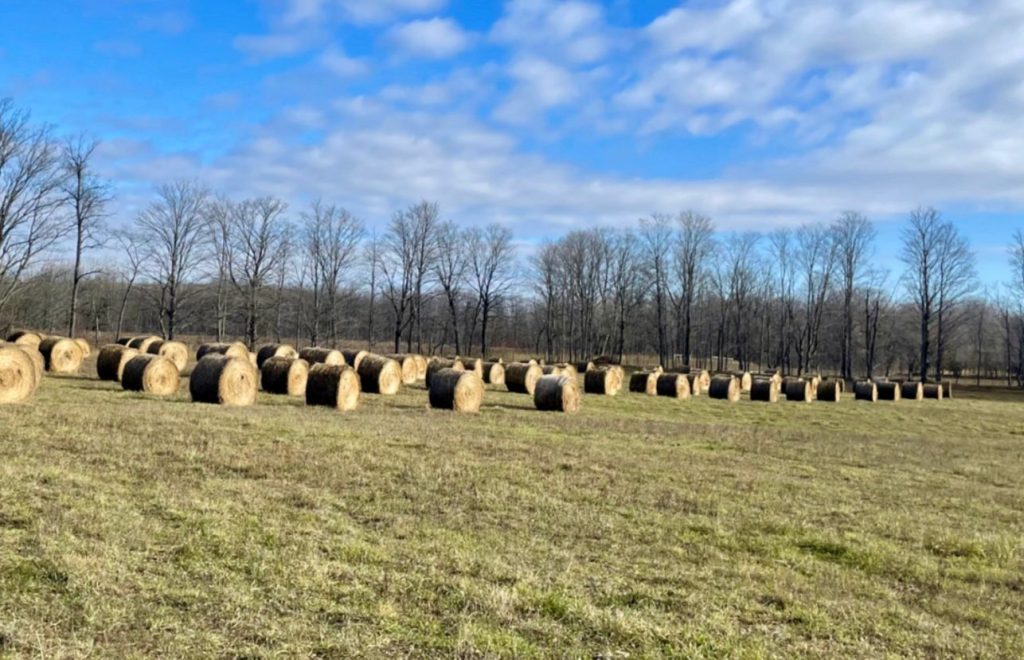
These are some of the bales we've laid out for this year's bale grazing. We will progressively give our cows new sections of hay week after week this winter. This will feed our cows through the colder months and will also feed our soil for many years.

By placing the bales strategically and feeding the cows in stages, we make sure that all the waste hay they don't eat, along with their manure, is spread out evenly across this section of the field. As a result, the whole area benefits.

Turning "Waste" Into Soil Health

All of that "waste" will provide organic matter, nutrients, and food for the life in the soil for years to come. Because of this, when the cows come back to this section of the field next summer, and for several years after that, the soil will be healthier, and the grasses they graze will be more plentiful.

Thank you for following along on our journey. We are grateful for your support and continued interest in our work.

Wild Meadows Farm

Blog: On The Farm

Grey County

Durham, Ontario

How to Wrap Up Grazing Season

Regenerative Farming

More from the blog

From Pasture to Price Tag: Understanding the Rising Cost of Meat

I consider myself very fortunate that I rarely go to the grocery store (we have one in our backyard, and for the things we don’t have here, Rebecca is usually the one who goes). When I do find myself there, though, I usually linger in the meat aisle to take a look at the prices. For the record, when we set prices for our products, we do not consider prices in stores or those of competitors. We determine prices based on our costs, plus a markup that we know will keep our doors open and the business sustainable. I do, however, find observing grocery store prices interesting and telling of what the commodity meat system produces and how it is priced. Just a few years ago, I often thought to myself how amazingly inexpensive meat was at the grocery store. Products like ground beef, chicken, and many pork cuts were so cheap. More recently, prices in stores are definitely up across the board. While our prices are still higher (and justifiably so, due to the quality of life our animals experience and the quality of meat our customers receive), the difference isn’t as great as it used to be. So why have grocery store prices increased so much? 1) Inflation is affecting everyone.Inflation is affecting everyone, including farmers, butchers, transport companies, and even grocery stores. Out-of-control money printing, higher energy costs, higher taxes, and wages that don’t keep up are a recipe for higher food prices—and for the general public to feel the strain financially. 2) Supply and demand are out of whack.Several factors, such as drought in the West, an aging farmer population, and higher beef prices (which discourage farmers from maintaining breeding stock), are leading to a lower cattle “inventory” in North America. That means fewer calves and a lower overall population, reducing supply. No one really knows when beef prices will come down, but the best-case scenario appears to be early 2028, based on what I’ve heard. Traditionally, chicken and other less expensive proteins have helped replace beef as prices rise. While it’s true that more people are choosing chicken as an alternative, beef demand has remained strong despite higher prices. Additionally, increased demand for chicken, combined with population growth and Canada’s restrictive production system (supply management), is projected to raise chicken prices by 25% in 2026. 3) Demand for meat isn’t slowing down.Experts often claim that more people will turn to “alternative” proteins as prices rise, and perhaps this is true for some. But you can’t beat the real thing, and I believe most people understand this. The public outcry over news that cloned meat could enter the supply chain without labelling is a good indicator that people do not want their food tampered with. So while I believe our products exist on a different playing field than their commodity and mass-produced counterparts, it’s interesting to observe how markets are changing and to track how these shifts may impact our customers and our business. Thanks for following along, and I hope you find my insights into our food system useful.

Cloned Meat? Never on Our Farm!

Over the past week, I've received quite a few messages about Health Canada's recent announcement. They have deemed cloned meat, specifically beef and pork, as safe. This means there will be no labels identifying it as cloned and no warnings to consumers...